



By Travis Cotterill, P. Eng, Lead Project Engineer
Published in World Pipelined Magazine – September Edition 2026
Go Beyond The MesH
Protective pipeline coating systems are the first line of defense against abrasion and damage that can lead to costly corrosion.
Rocky trenches and backfill conditions, handling, and ground movement all create opportunities for impact, puncture, abrasion, and scouring of the pipeline coating.
A pipeline rockshield protects the coating system and is an essential component of the overall pipeline integrity system.
Let’s go beyond the mesh.
Advancements In Pipeline Construction
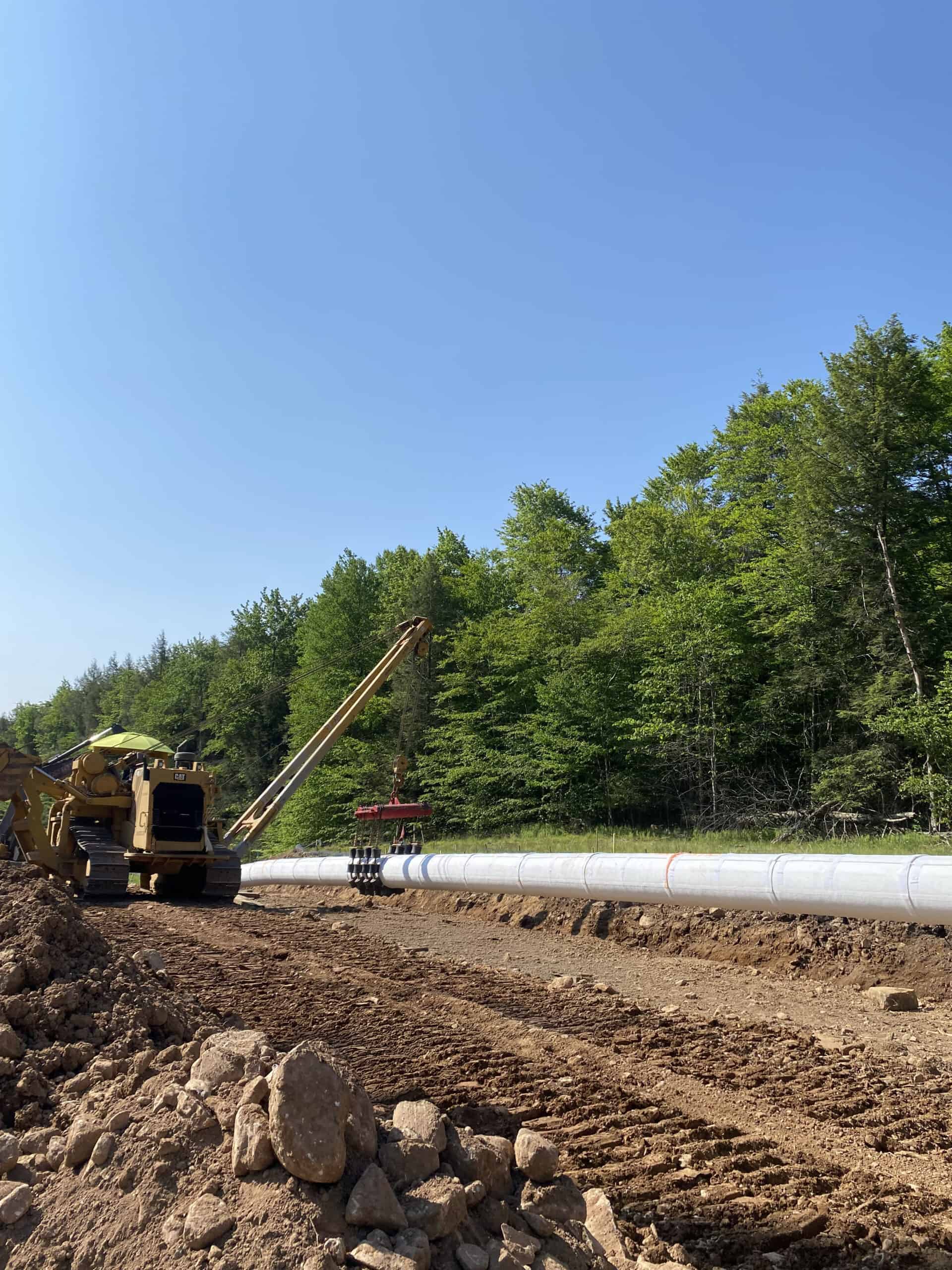
For decades, the pipeline construction industry has primarily relied on two traditional rockshield designs: extruded plastic meshes with repeating diamond-shaped openings and randomly extruded flexible stranded polyvinyl chloride (PVC).
Both are intended to protect the pipeline coating while allowing cathodic protection (CP) currents to reach the pipe through small openings in the material.
While these traditional rockshield designs have been widely used in the industry, the small openings that allow groundwater and CP currents also present a potential risk to the pipeline coating.
Impacts from angular rocks or scouring from small stones and grit that enter the openings can damage the coating that the rockshield is intended to protect.
Rockshields should support four key requirements:
- mechanical protection
- cathodic protection compatibility
- field durability
- installation efficiency
How RockshieldS SHOULD Perform
Rockshield selection has traditionally been driven by a short list of questions:
- Does it pass a rock-drop test?
- Is it CP compatible?
- Can it be wrapped around the pipe?
- Is it easy to work with?
Modern pipeline construction requires a broader evaluation.
Owners and contractors should also consider:
- the size and angularity of permitted backfill
- puncture resistance
- abrasion protection
- permeability
- cold-temperature flexibility
- weight and handling
- compatibility with rolling cradles
- crew safety
- and the installed condition after lowering-in
Reduced labor requirements, faster installation speed, and the ability to order custom-sized material can also affect the true installed cost and should be carefully considered.

A Performance-Based Approach to Rockshield Selection
A performance-based rockshield specification should identify minimum expectations. This approach gives engineers a more meaningful basis for evaluating alternatives and gives contractors clarity about installation requirements before mobilization.
Here’s what to look for:
- Impact resistance
- Puncture resistance
- Low-temperature flexibility
- Permeability
- Cathodic protection compatibility
- Ease of installation
- Secure attachment during handling and lowering-in
Protecting the Pipeline Coating From Construction Through Operation
For pipeline designers and owners, the objective is not simply to put something between the coating and the backfill.
It is to preserve the coating system through all stages of construction, from stringing to backfilling and throughout the operating life of the pipeline, without compromising cathodic protection.
For contractors, the rockshield must also be practical to transport, handle, and install safely without slowing down construction.
Its physical properties address the forces encountered in harsh backfill. Its permeable fiber structure supports cathodic protection systems without relying on intentional openings in its material. Its lightweight, flexible format and simplified fastening methods reduce installation complexity.
In an industry increasingly focused on pipeline integrity, productivity, cost, and safety, an advanced material has been carefully engineered with all sides of the equation in mind.
It Starts with the Material
Rockshields should be designed to withstand severe impact.
They are generally tested using a modified ASTM G13 rock-drop test, where 50 lbs (22.68 kg) of rocks are dropped numerous times from 6.5 ft (1.98 m) onto fusion-bonded epoxy (FBE) coated pipe protected by a rockshield.
Ten drops of 1.5-inch (38.1 mm), 3-inch (76.2 mm), 4-inch (101.6 mm), and 6-inch (152.4 mm) rocks are required, with the pipe coating inspected for damage by a holiday detector after each drop.
While many rockshields struggle to pass 40 drops up to the industry-standard 6-inch (152.4 mm) impact threshold, RockStop® rockshield was tested beyond the industry standard to include 8-inch (203.2 mm) rock, which generally has twice the impact energy of 6-inch (152.4 mm) rocks – no coating damage was reported after 50 drops.
ASTM G14 modified is another common impact test using a 5/8-inch diameter pipe, with RockStop® rockshield having a recorded strength of 432.4 in-lb (48.9 J).
TESTED Beyond Impact Resistance
Pipeline coating protection is not a single-property problem.
These properties are important because a rockshield must do more than absorb impact. It must resist penetration and abrasion from angular backfill, tolerate tensile pulling and handling, and maintain protection as the pipe moves through each stage of construction, from rolling cradles to placement in the trench.
RockStop® goes above and beyond:
- ASTM D6241 puncture strength: 7,496 lb (33,344 N)
- Diaphragm burst strength: 2,820 lb (12,544 N)
- Grab strength: 2,113 lb (9,400 N)
- Elongation at break: 86%
- Download specifications
RockStop® rockshield is a minimum 1/2-inch (12.7-mm) thick engineered non-woven geotextile made from a proprietary blend of fibers that have been proven for long-term underground use. RockStop® is lightweight and easy to handle, while its published physical properties demonstrate substantially improved performance against impacts, punctures, and abrasion compared with traditional rockshield designs.
Full-Coverage Protection Without Sacrificing Permeability
Diamond-patterned extruded meshes rely on a grid with uniform openings, while stranded PVC products rely on randomly overlapping strands bonded into a porous mat. In both cases, voids are intentionally present. Those voids mean that protection depends partly on the size, geometry, and orientation of the backfill relative to the openings leaving thin areas where rocks are still close to the pipe.
When comparing rockshields, the most visible difference is the intentional openings.
The distinction is important: permeability does not have to mean an open protective structure.
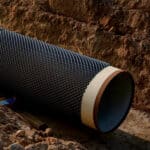
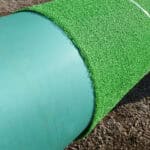
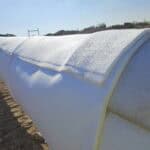
With an interlocking fiber structure, RockStop® rockshield provides a thick, continuous cushioning layer around the pipe for full-coverage protection, keeping smaller stones and coarse soil even further off the pipe. This is particularly important when crushed or angular backfill is used, or where a point-load impact can damage pipeline coating.
RockStop® rockshield combines permeability with continuous physical coverage, leaving no gaps or thin section ensuring a consistent thickness and reliable impact protection.
Cathodic Protection Compatibility Without Exposing the Coating
Traditional mesh or stranded rockshields address this requirement through openings in the protective layer, allowing water and soil to pass through the void spaces, which allows CP currents to be transmitted to the pipeline.
On cathodically protected steel pipelines, any additional protective system must not hold water against the pipe or inhibit the CP system’s ability to deliver protective current.
For pipeline integrity teams, they need a combination of full mechanical coverage with a permeable pathway for the electrochemical environment on which cathodic protection depends.
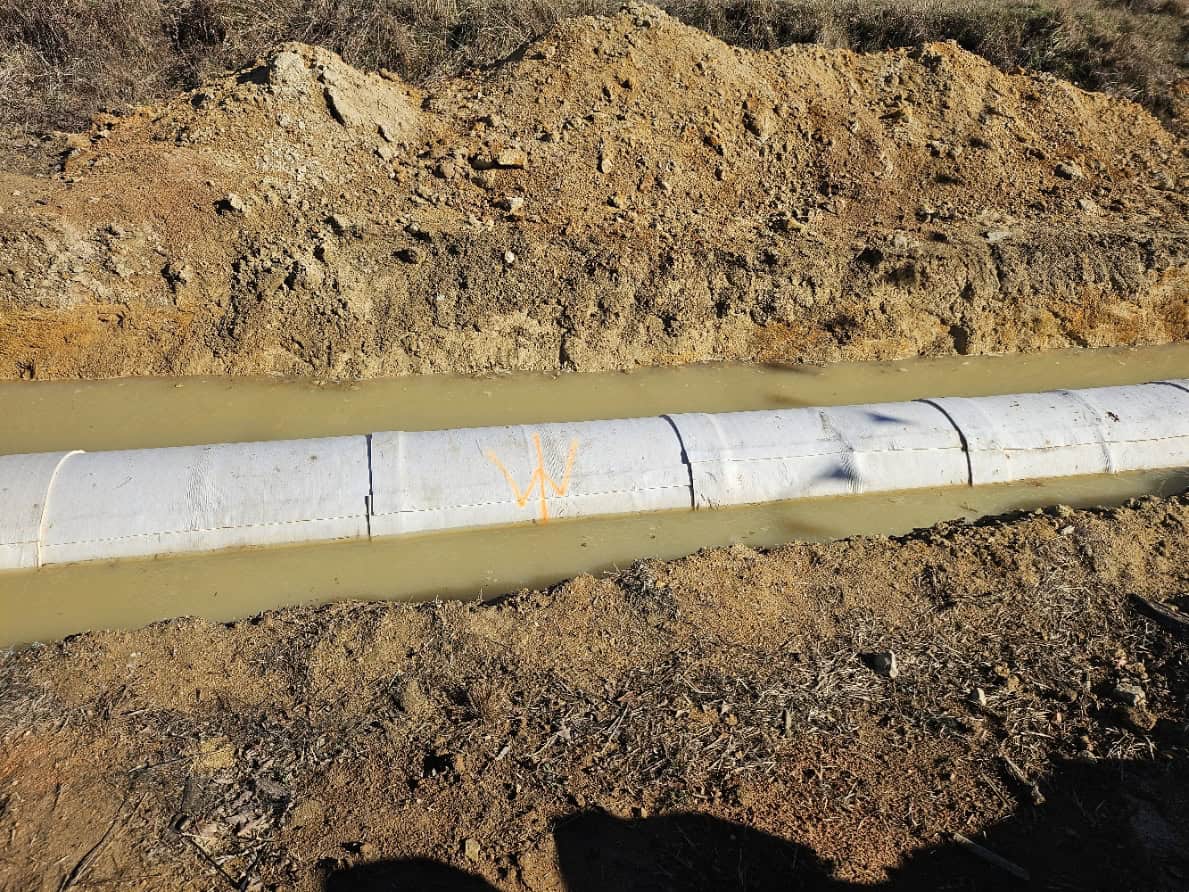
There is now a different approach by using a highly permeable geotextile that allows moisture inherently present in the ground to transfer CP currents without compromising impact strength or abrasion resistance. Groundwater can now move freely to and from the pipeline coating while the fiber matrix continues to separate the coating from rocks and granular backfill.
Published RockStop® rockshield testing reports permeability of 5,300 gal/ft²/day, or 0.25 cm/s. Testing for cathodic protection compatibility reports no inhibiting effect on cathodic protection.
RockStop® rockshield’s permeability is similar to clean sand, meaning it will drain as well as or better than the surrounding soil. Download spec sheet.
MAKE Pipeline CONSTRUCTION FASTER, SAFER, and EASIER
How a rockshield ultimately performs in the field depends on whether crews can apply it consistently under real construction conditions. The work is repetitive, and heavier or stiffer materials can be tedious and more difficult to handle and install.
This is where differences among rockshield designs can become especially significant.
Traditional rockshield is commonly supplied in rolls or pads, wrapped around the pipe and secured with tape, non-metallic strapping, or integrated fastening systems.
On larger-diameter pipe, conventional tape installation can require workers to reach around the pipe repeatedly and may place a worker on the ditch side of the pipe to complete the wrap.
RockStop® rockshield is designed to reduce these installation steps.
It can be supplied as custom-cut pads or as longer rolls that can be trimmed in the field. Two quick and simple fastening options are available.
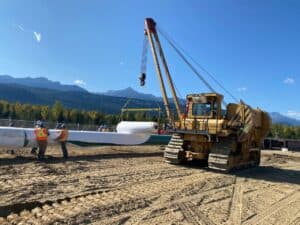
QuikStrip® Fasteners
QuikStrip® fasteners use a hook-and-loop-style mechanical connection to secure overlapping sections of RockStop® rockshield while allowing for removal if required. These go on easily from one side of the pipe, keeping workers safely away from the trench side with no passing over an under for easy installation crews love.
FAST Heat-Sealed Connections
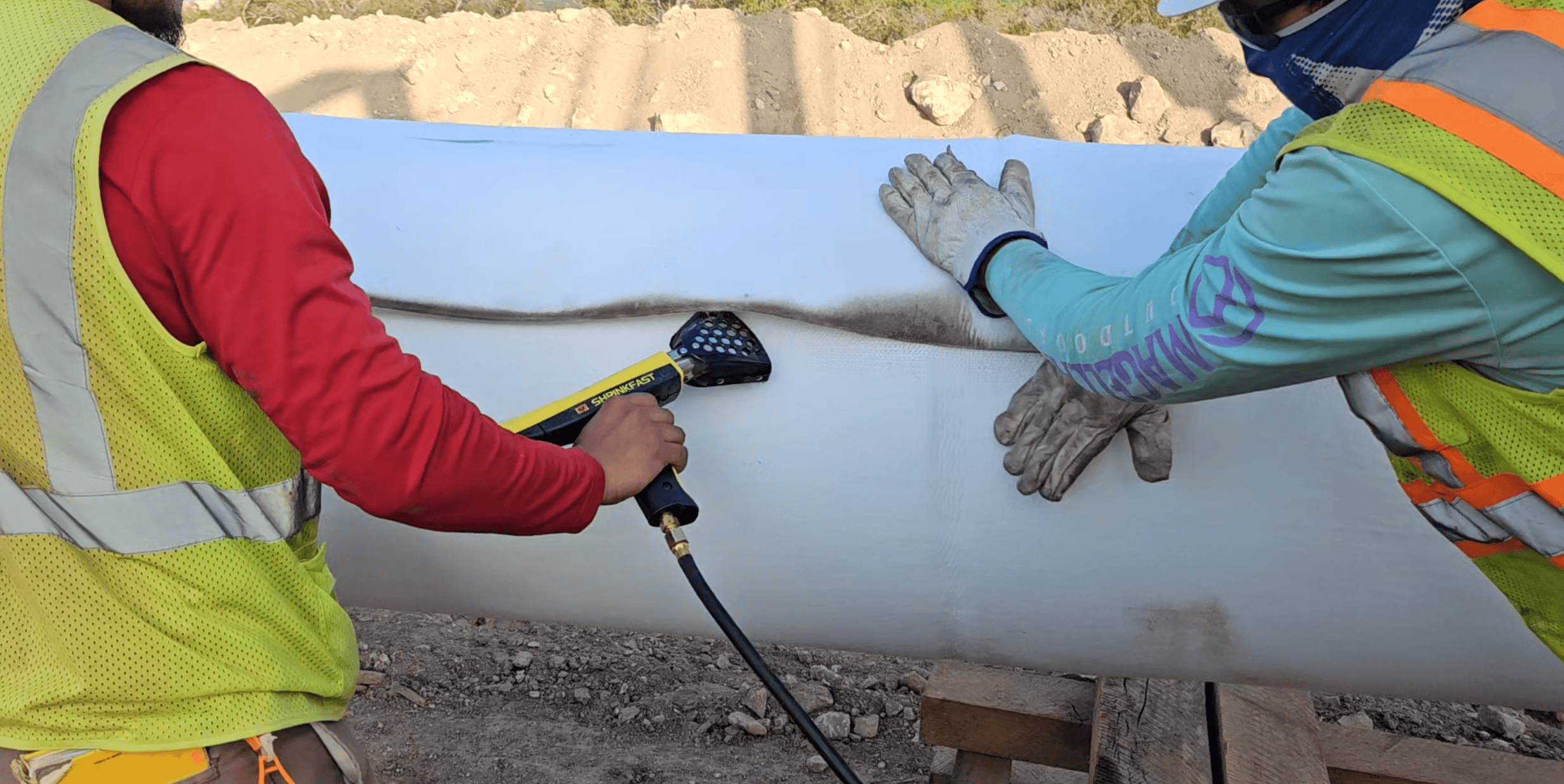
Uniquely, a low-temperature heat tool can be used to quickly bond the material to itself, creating a permanent seal in seconds without tape or other fasteners.
A controlled field trial on 48-inch (1219 mm) OD pipe reported three times faster installation compared with traditional spiral-tape rockshield installation methods, significantly reducing labor costs.
The faster and easier installation methods can also increase safety by reducing repetitive-motion strain, simplifying crew coordination, and shortening the time workers spend adjacent to suspended or staged pipe.
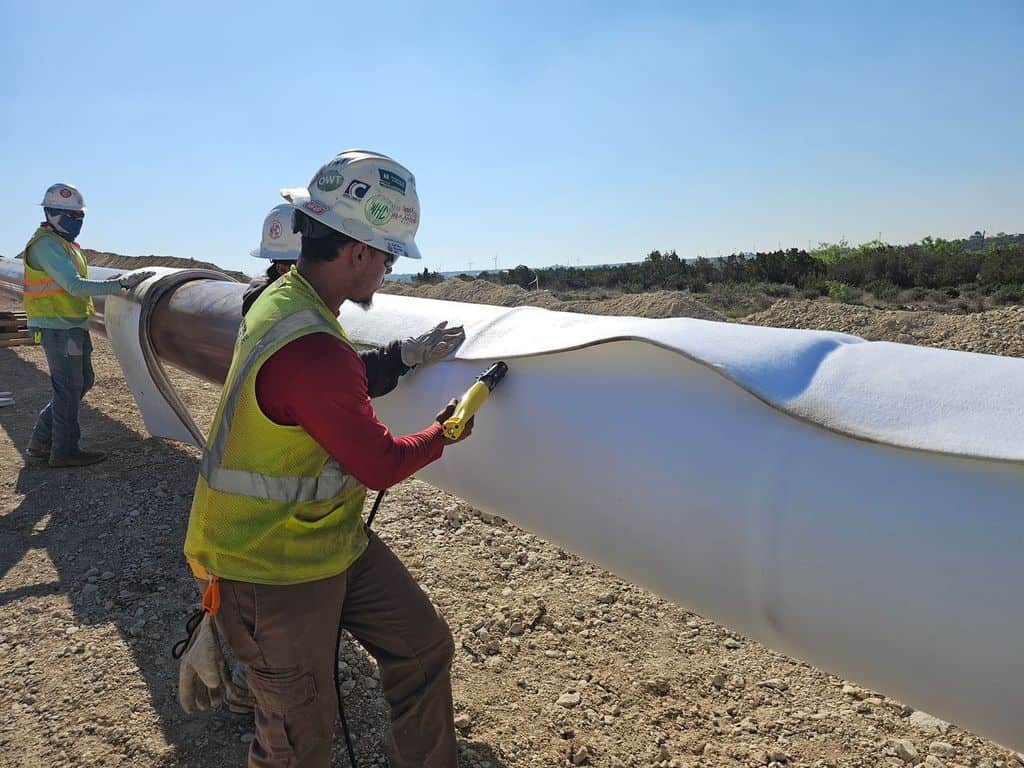
HANDLING IN Real-World Field Conditions
While some diamond-patterned rockshields are similarly lightweight, their extruded structure can present a comparatively rigid and rough surface to the touch, while random-strand PVC rockshields are substantially heavier, dense material creating rough, labor intensive handling, and unnecessary risk.
RockStop® rockshield remains soft to the touch, flexible, and weighs only 0.41 lb/ft² (2 kg/m²) and is designed to be installed without a worker on the ditch side of the pipe.
The lighter, textile-like material of RockStop® is easier to lift, position, and conform around large-diameter pipe, particularly in cold-weather conditions, making installation faster, safer, and easier for everyone.
Cold-Weather Flexibility Matters
Cold-weather behavior is equally important.
RockStop® rockshield’s published low-temperature brittleness result is at or below -65°F (-54°C), the limit of the test chamber used. A separate wrap test reports that the dry material could be fully wrapped around 2-inch outer diameter (OD) pipe at -58°F (-50°C).
A material that remains pliable is easier to position, wrap, and secure, reducing the handling difficulties associated with rigid or sharp-edged products in winter construction.
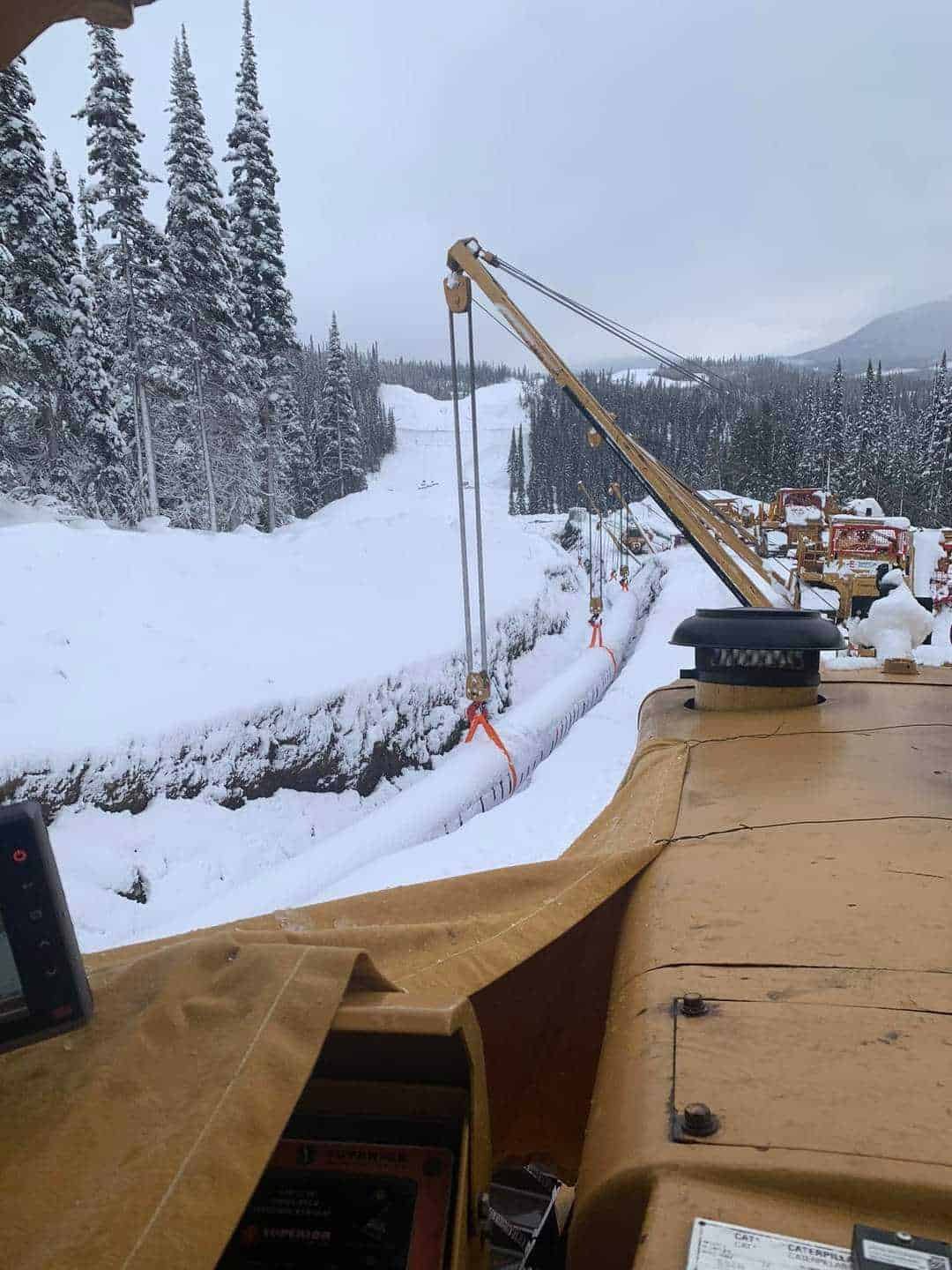
MAINTAIN PERFORMANCE Through Handling and LowerING-In
Rockshields can loose their performance and become less effective if altered during handling and lowering in. It needs to remain in place and withstand construction even after applied to the pipe.
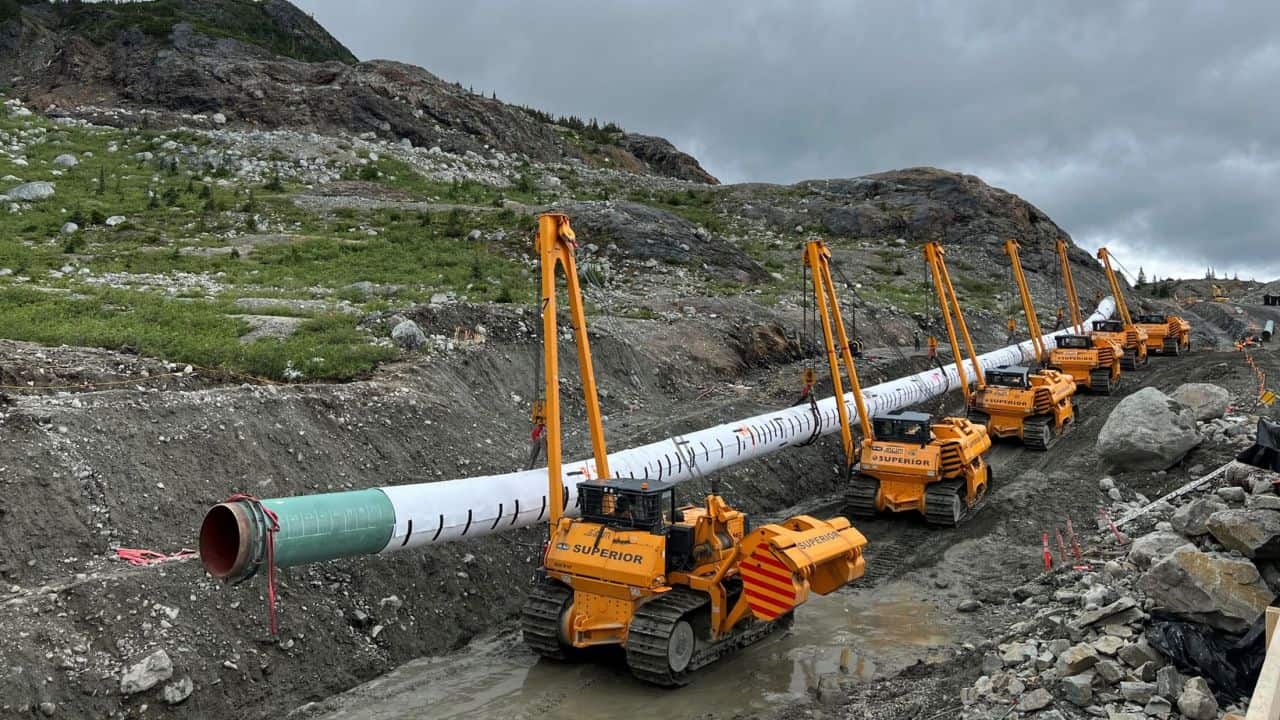
Pipes pass through rolling cradles, are lifted by sidebooms, are lowered into irregular trenches, and are subjected to movement as backfill is placed and consolidated.
A material that bunches, tears, or shifts can leave the protective pipeline coating exposed precisely when protection is needed most.
RockStop® rockshield is engineered to work with rolling cradles and will not bunch, tear, loose shape, or stretch out after lowering in.
Both installation methods available only with RockStop® create connections stronger than any other rockshield and ensure smooth installation from start to finish.
Conclusion
The role of a pipeline rockshield is ultimately larger than simply placing a protective material between a coated pipe and the surrounding backfill.
Effective protection must account for the conditions a pipeline encounters before, during, and after installation: impact from large rocks, abrasion from smaller particles, handling stresses, cold temperatures, groundwater movement, cathodic protection requirements, and the practical realities of field installation.
RockStop® approaches these challenges through a full-coverage, permeable geotextile design that combines mechanical protection with field flexibility and simplified installation.
For pipeline owners, engineers, and contractors evaluating rockshield systems, the question is no longer simply whether a product can withstand a rock-drop test. The more meaningful question is whether the rockshield can protect the pipeline coating, support pipeline integrity, and perform reliably throughout the construction process and beyond.
That broader approach is where modern pipeline rockshield design can make a difference.
Learn more or contact us about getting RockStop® on your projects.